
The 2026 Master Guide: How to Spot Fake Luxury Watches and Protect Your Collection

The fast-paced luxury market of 2026, the stakes have never been higher. High-end watches and designer handbags are no longer just fashion statements; they are alternative assets that often outperform traditional stocks. However, this surge in value has birthed a sophisticated underground industry: the “Superfake.”
These are not the low-quality knockoffs of a decade ago. Today’s counterfeiters use 3D laser scanning, genuine Swiss-grade steel, and even “franken-parts” (mixing real and fake components) to deceive buyers. For any collector, mastering how to spot fake luxury watches and how to spot fake luxury bags is the only way to ensure your “investment” isn’t a high-priced paperweight.
The Horological Minefield – How to Spot Fake Luxury Watches
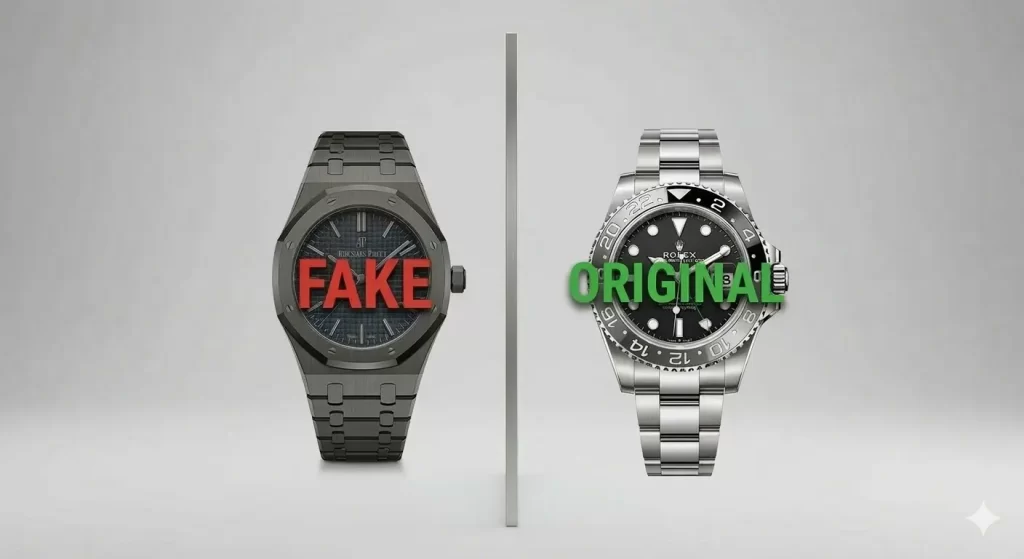
While Rolex remains the most counterfeited brand, the rise of “Superclones” has extended to Patek Philippe, Audemars Piguet, and Omega. Modern replicas use “Cloned Calibers”—movements that look almost identical to the real thing through a display caseback. To find the truth, you must look at the “unfakeable” details of high-end horology.
1. The “Black Hole” Effect (The Cyclops Lens)
The Cyclops lens is the magnifying glass over the date window. Luxury brands like Rolex spend millions perfecting this tiny piece of sapphire.
-
The Science: A genuine luxury Cyclops magnifies the date exactly 2.5x. Since 2005, top-tier brands have applied a double-sided anti-reflective (AR) coating only to the Cyclops, not the rest of the crystal.
-
The Tell: Look at the watch from a 45-degree angle. On a genuine piece, the date remains crisp and the lens looks like a dark, non-reflective “black hole.” On most fakes, the lens will reflect overhead lights like a mirror. If the magnification looks weak (like 1.5x) or the date appears “fuzzy” at an angle, it’s an immediate red flag.
2. The Weight of Superior Metallurgy
Luxury watches are heavy because they use dense, high-grade materials.
-
904L Oystersteel: Rolex uses 904L steel, which is denser and more corrosion-resistant than the 316L steel used by 99% of other watchmakers. A genuine stainless steel Submariner should weigh approximately 155 to 160 grams.
-
Precious Metals: If you are holding a Gold or Platinum watch, weight is the ultimate lie detector. Gold is significantly heavier than the lead-filled steel used in fakes.
-
The Tell: Counterfeiters often blow their budget on the watch head and skimp on the bracelet links. If the watch feels “top-heavy” or the bracelet feels “jangly” and light, it is likely a fake.
3. The 6 O’clock Secret (Micro-Etching)
Many luxury brands have hidden “signatures” in their crystals. Rolex, for instance, etches a tiny “Coronet” (crown logo) into the sapphire at the 6 o’clock position.
-
How to see it: It is invisible to the naked eye. You need a jeweler’s loupe and a flashlight. Shine the light horizontally across the crystal from the 12 o’clock position.
-
The Tell: In a genuine watch, this etching is made of hundreds of tiny, distinct dots at different depths (pointillism). In a fake, the dots are often uneven, or the logo is etched as a solid line that is far too easy to see.
The Designer’s Eye – How to Spot Fake Luxury Bags
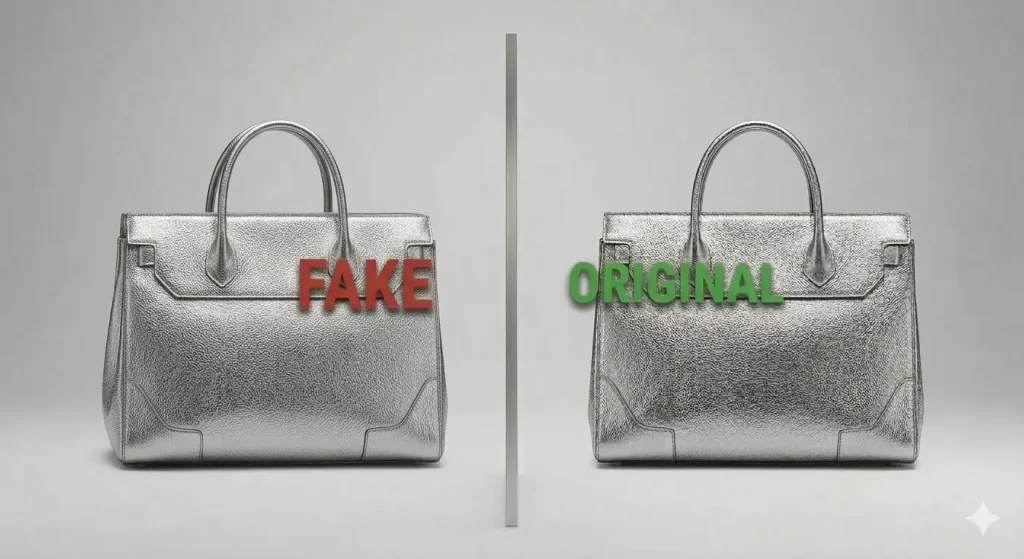
The “Superfake” handbag market is currently flooded with “Triple-A” replicas that use genuine Italian leather. To differentiate them, you must look at the structural engineering of the bag rather than just the material.
1. The “Logic” of the Stitching
Luxury houses like Hermès and Chanel do not just sew bags; they engineer them.
-
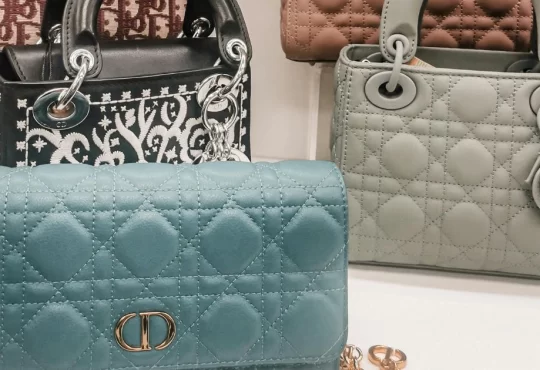
The Chanel Standard: On a classic Quilted Flap Bag, the “quilt” pattern must line up perfectly. When the flap is closed, the diamond pattern on the flap should continue seamlessly into the pattern on the body.
-
The Tell: Count the stitches. Luxury brands use a very high stitch count (at least 10 stitches per inch) to ensure the leather doesn’t “pucker.” If you see 6 or 7 thick, chunky stitches, the bag was made on a mass-production machine, not by a master artisan.
2. The “Clink” of the Hardware
Hardware is the most expensive part of a bag to replicate correctly. Genuine luxury hardware is usually made of solid brass and then plated in 24k gold or palladium.
-
The Sound Test: Gently tap the chain or the toggle against your wedding ring or a coin. Solid brass has a deep, dull “thud.”
-
The Tell: Counterfeiters use zinc or aluminum alloys that are hollow inside to save weight. These fakes produce a high-pitched, “tinny” clinking sound. Additionally, check the zippers. Brands like Louis Vuitton use high-end zippers that move with a “heavy,” buttery smoothness. If the zipper catches or feels “scratchy,” it’s a fake.
3. The “Birkin” Handle Test (Pro-Level)
If you are looking at a Hermès Birkin or Kelly, look at the handles.
-
The Detail: Because they are handmade, the handles of a genuine Hermès bag will stand perfectly upright on their own. They are stuffed with layers of leather and glue, making them rigid.
-
The Tell: Fake handles are often stuffed with foam or plastic. Over time—or even right out of the box—these handles will begin to “slump” or lean to one side. A real Hermès handle is a piece of architecture; it never loses its shape.
The Psychology of “Too Good to Be True”
Beyond the physical checks, the most important part of how to spot fake luxury watches and how to spot fake luxury bags is the context of the sale.
-
The “Full Set” Trap: In 2026, counterfeiters have mastered the art of faking boxes, papers, and “Certificates of Authenticity.” Never assume a watch or bag is real just because it comes with a plastic warranty card. These cards are easier to fake than the item itself.
-
The Price Anchor: There is no such thing as a “steal” in the luxury world. If a Rolex GMT-Master II is selling for 30% below market value, there is a reason. Either the movement has been swapped for fake parts (a “Franken-watch”), or the entire piece is a “Superfake.”
-
The Smell Test: Genuine leather has an earthy, sweet, and unmistakable scent. If you open a dust bag and smell glue, burnt rubber, or “new car” chemicals, the leather has been treated with synthetic dyes to hide its low quality.
Advanced Verification in 2026
As technology advances, so do the tools for collectors. If you are serious about your investment, you should look into these three methods:
-
The Timegrapher Test: A mechanical watch movement has a “heartbeat.” A genuine Swiss movement will show a steady, clean line on a timegrapher. A fake movement will often show “noise” or irregular beat errors that indicate poor internal finishing.
-
AI-Powered Authentication: Apps like Entrupy now use microscopic cameras to analyze leather grain and stitching patterns against a database of millions of genuine items. This is often more accurate than the human eye.
-
Blockchain Paperwork: Many brands in 2026 are moving to “Digital Passports” (NFTs) on the blockchain. If a seller cannot transfer the digital ownership of the watch or bag to your secure wallet, the item is likely a fake.
The Professional’s Golden Rule
The “Superfake” era has made it impossible to be 100% certain with the naked eye alone. The final word on how to spot fake luxury watches often requires a “pressure test” or a look at the movement through a 10x loupe to check the finishing on the gears (look for “Côtes de Genève” or “Perlage” polishing).
Your Action Plan:
-
Always inspect the Serial Number: On a modern Rolex, it is engraved on the “rehaut” (the inner ring between the dial and the crystal).
-
Always check the Font: Luxury brands use proprietary fonts with specific spacing (kerning). If a “1” looks like an “I”, it’s a fake.
-
Buy the Seller: Only purchase from reputable dealers with a long-standing history and a money-back authenticity guarantee.
By mastering these details, you aren’t just buying a bag or a watch—you are protecting your legacy and your lifestyle.